
The Risks of Lying on Your C.V.
Written by Ryan Senior | Principal Solicitor
Published: 15 November 2026
Last Updated: 15 November 2026
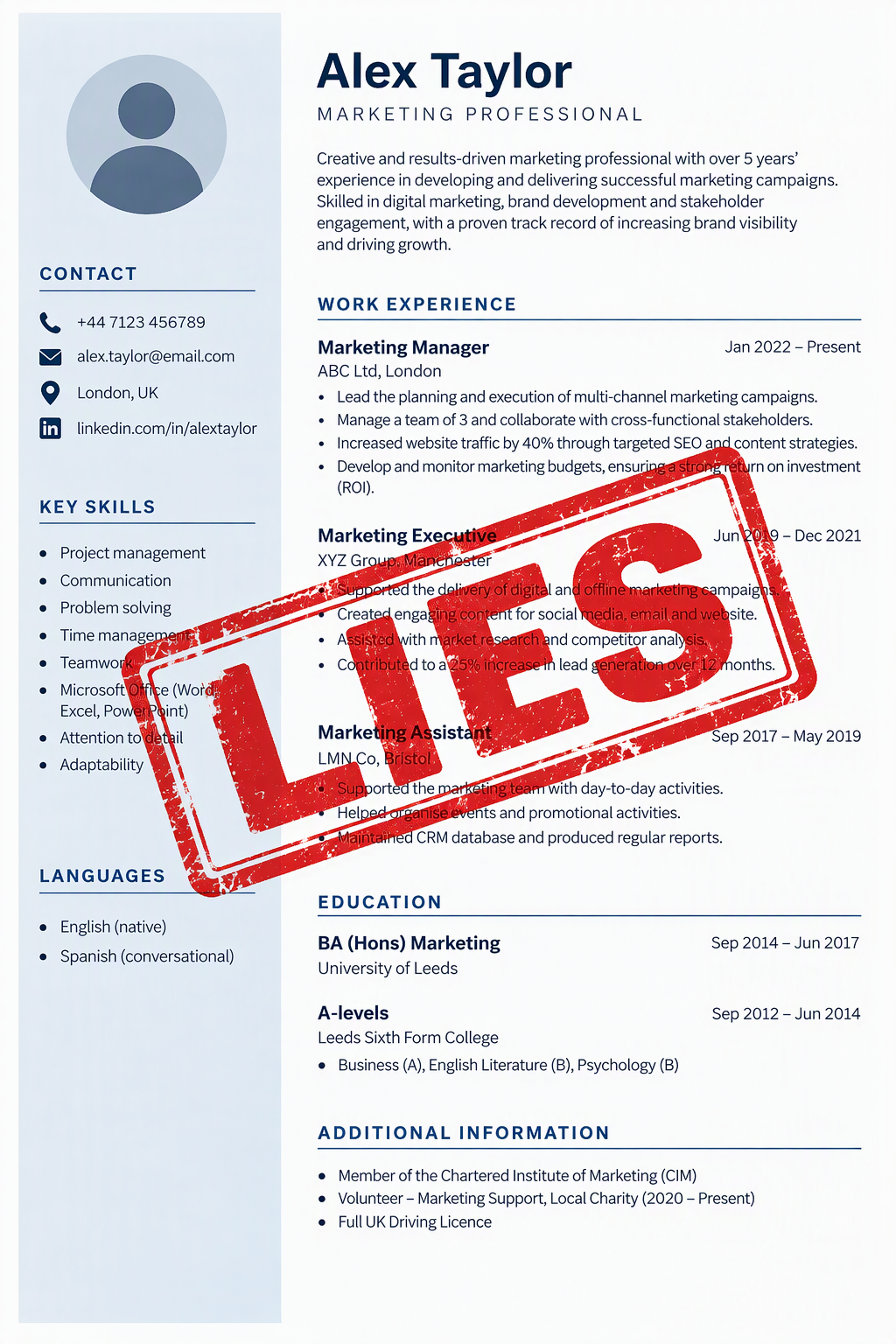
In an extremely competitive job market, it can be tempting to exaggerate qualifications, inflate experience, or even invent achievements in an attempt to secure an interview. Some candidates may believe that a small lie on a CV is harmless, particularly if they feel capable of performing the role. However, dishonesty during the recruitment process can have serious and lasting consequences.
This article explores the risks of lying on your CV and why honesty remains the best policy when applying for jobs.
What Constitutes a Lie on a CV?
Misrepresentation can take many forms, including:
Exaggerating grades, qualifications or academic achievements.
Inflating job titles or responsibilities.
Extending employment dates to cover gaps in employment.
Inventing previous employment or work experience.
While some candidates may regard these as minor embellishments, employers often take a different view.

The Risks
Losing a Job Offer
Many employers conduct background checks before confirming an appointment. These checks may include:
Verification of educational qualifications.
Employment history checks.
Reference checks.
Professional accreditation verification.
Right-to-work and identity checks.
If discrepancies are discovered during the recruitment process, an employer may withdraw a job offer immediately. A candidate who has invested weeks or months pursuing an opportunity may see it disappear overnight because of inaccurate information.
Dismissal for Gross Misconduct
The consequences can be even more severe if the deception is discovered after employment has begun. If an employer later finds that an employee secured their position through dishonesty, they may commence disciplinary proceedings.
In serious cases, the employee may be dismissed for gross misconduct, potentially without notice pay. Employers are generally entitled to view dishonesty during recruitment as a fundamental breach of trust and confidence.
Damage to Professional Reputation
If dishonesty becomes known within an industry, it may affect future employment prospects. Recruiters and employers often communicate within professional networks, and candidates known to have misrepresented themselves may struggle to gain trust in future applications.
Certain professions, particularly those involving regulated or licensed work, place significant emphasis on integrity and honesty.
Professional Regulatory Consequences
Individuals working in regulated professions may face disciplinary action from their professional body if they are found to have provided false information.
Regulators often regard dishonesty as a matter of professional integrity rather than a simple recruitment issue. Sanctions can range from warnings to suspension or removal from the profession altogether.
Criminal Liability
In certain situations, deliberately obtaining employment through significant deception can lead to more serious legal consequences.
This risk is particularly relevant where:
The role involves public trust.
Financial gain is obtained through fraudulent representations.
Safety-critical positions are involved.
While criminal prosecutions are relatively uncommon, candidates should not assume that fraudulent statements carry no legal risk.
Innocent Mistakes?
Not every CV error amounts to dishonesty.
Simple mistakes, such as incorrect dates, typographical errors, or misunderstandings regarding qualifications, are unlikely to be treated as seriously if they are genuinely accidental.
If an applicant discovers an error after submitting a CV, it is usually advisable to correct it promptly and transparently. Honest mistakes can often be forgiven; deliberate deception is far harder to explain.
Conclusion
Lying on a CV may seem like a shortcut to career success, but the risks can be substantial, as demonstrated above. Instead of exaggerating qualifications or experience, consider highlighting transferable skills, explaining career gaps honestly and tailoring applications to the role requirements.
Ultimately, a CV is not just a summary of qualifications and experience. It is also a reflection of a candidate's integrity. Honesty may not always secure every opportunity, but it provides the strongest foundation for a successful and sustainable career.

If you require any assistance with employment law please do not hesitate to contact us for a FREE 10 minute consultation
About the Author
Ryan Senior is a solicitor and founder of Code Legal Solicitors. Ryan advises clients on employment law, workplace conduct, and dispute resolution, providing practical guidance on the legal consequences of dishonesty during the recruitment process.